
UNBOUND
BREAKING BARRIERS,
BUILDING FUTURES
Grow your career. Empowered by AI. Rooted in Wellbeing
We offer education and resources to help women and organizations
navigate emerging tech and build meaningful
success — without trading health, connection, or purpose.
UNBOUND
BREAKING BARRIERS,
BUILDING FUTURES
Grow your career. Empowered by AI.
Rooted in Wellbeing.
We offer education and resources to help women and organizations navigate emerging tech and build meaningful success — without trading health, connection, or purpose.
What We Offer
SElf-paced Courses and Resources

Assessments, Tools, Blog, Courses and Ebooks! See below
Live virtual
AI courses

Click Below to Sign up for our Next Course!
Custom trainings For your teams

Schedule a Meeting to Review your Specific Needs!
Whats Your #1 Career Growth Challenge?
Take Your FREE Assessment Here to see whats holding you back and what you can do about it!
Features and Benefits
NAVIGATE THE AI LANDSCAPE
Navigate digital transformation and AI to advance rather than hinder your career
FIND YOUR VOICE
Discover your authentic leadership voice and build unshakable confidence
BUILD YOUR BRAND
Develop a compelling personal brand that opens doors to new opportunities
NEGOTIATE LIKE A PRO
Master the art of strategic self-advocacy without compromising your values
BOUNDARY MANAGEMENT
Create boundaries that protect your energy while enhancing your impact
VALUE ALIGNED SUCCESS
Define success on your own terms, creating a path aligned with your deepest values
build your network
How to develop the relationships that amplify your voice, expand your opportunities, and accelerate your impact.
leadership presence
How to embody your authentic authority in ways that create meaningful impact while remaining true to your core values and identity.
work life balance
Learn to manage your energy, aligned with your values and purpose to build a life in balance
Upcoming Courses
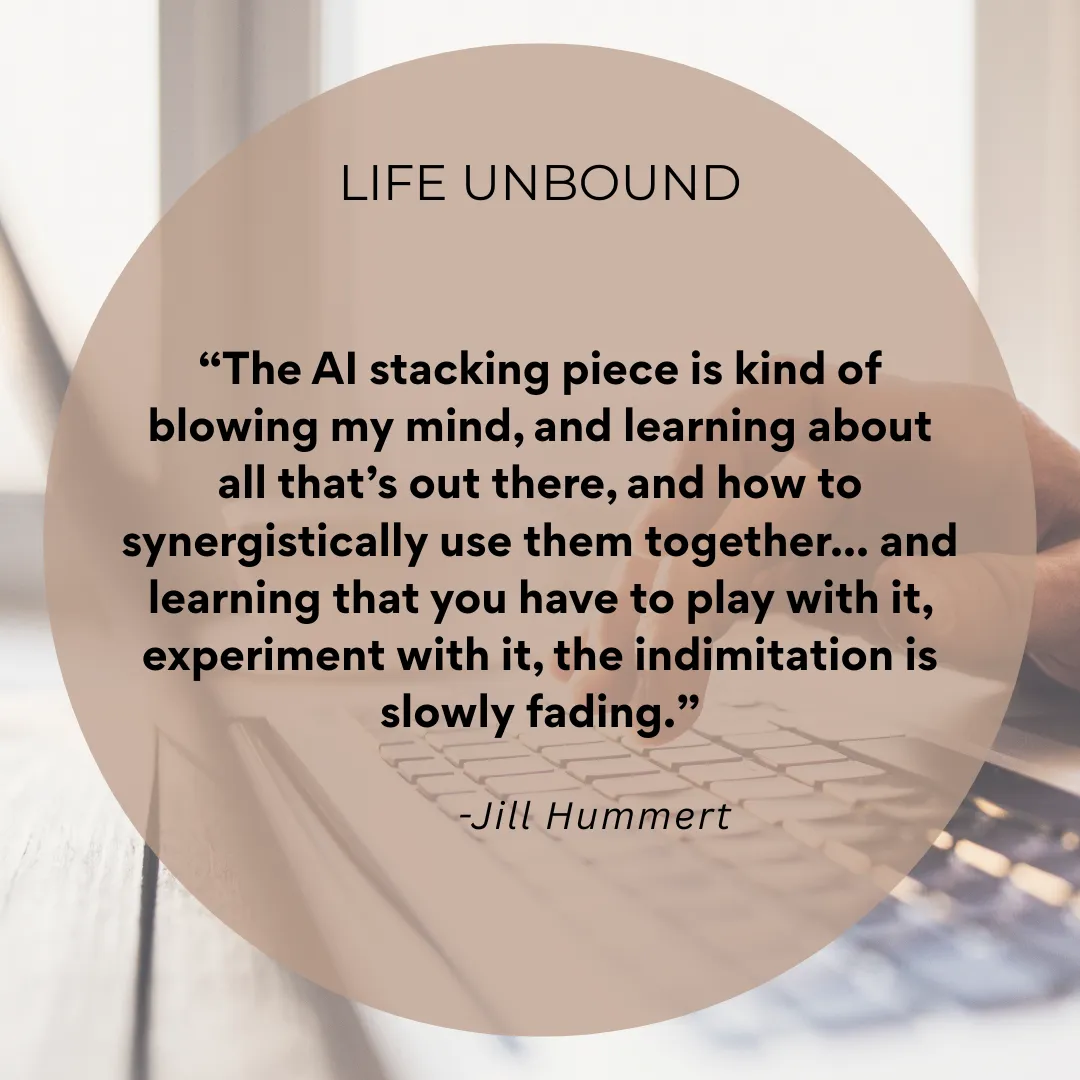
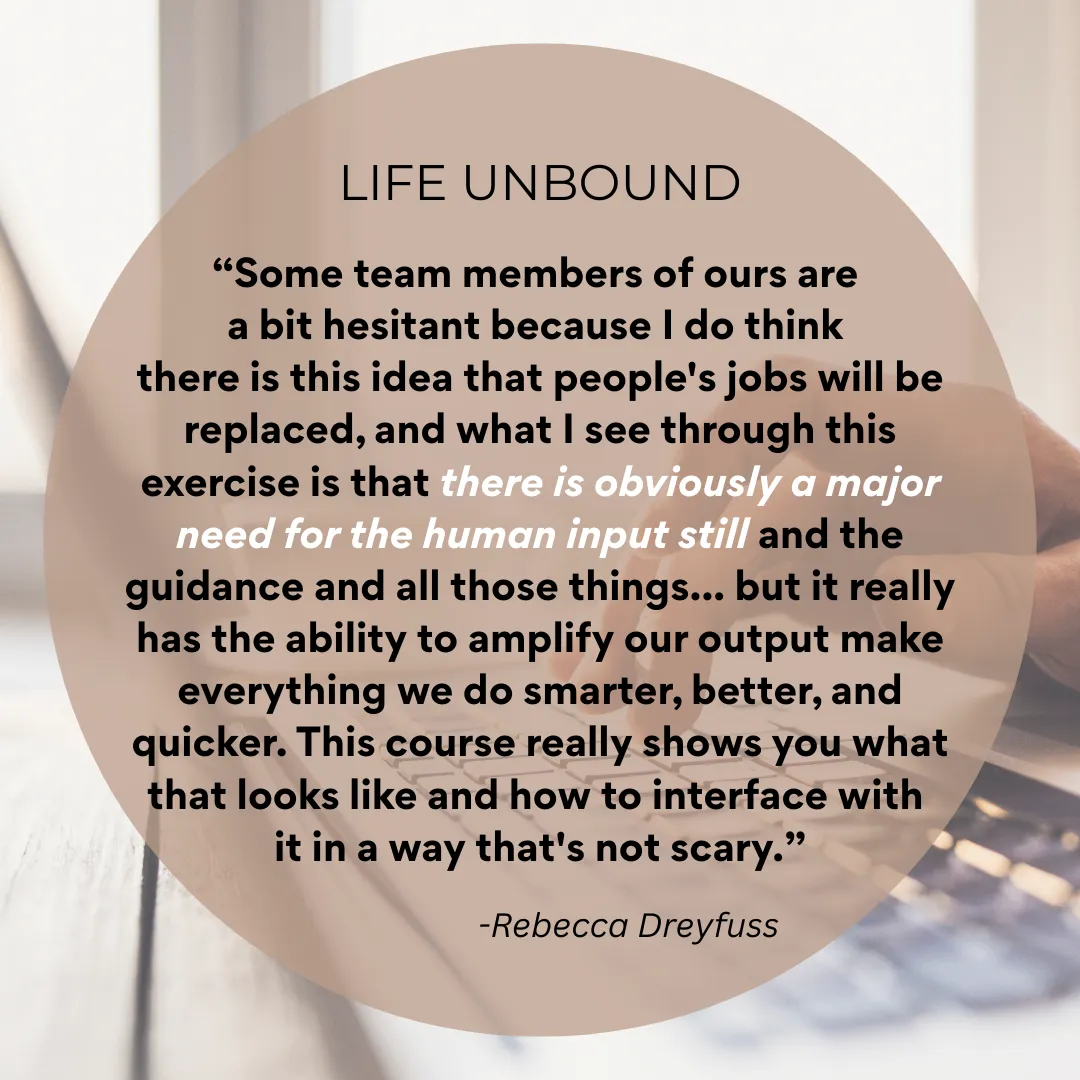
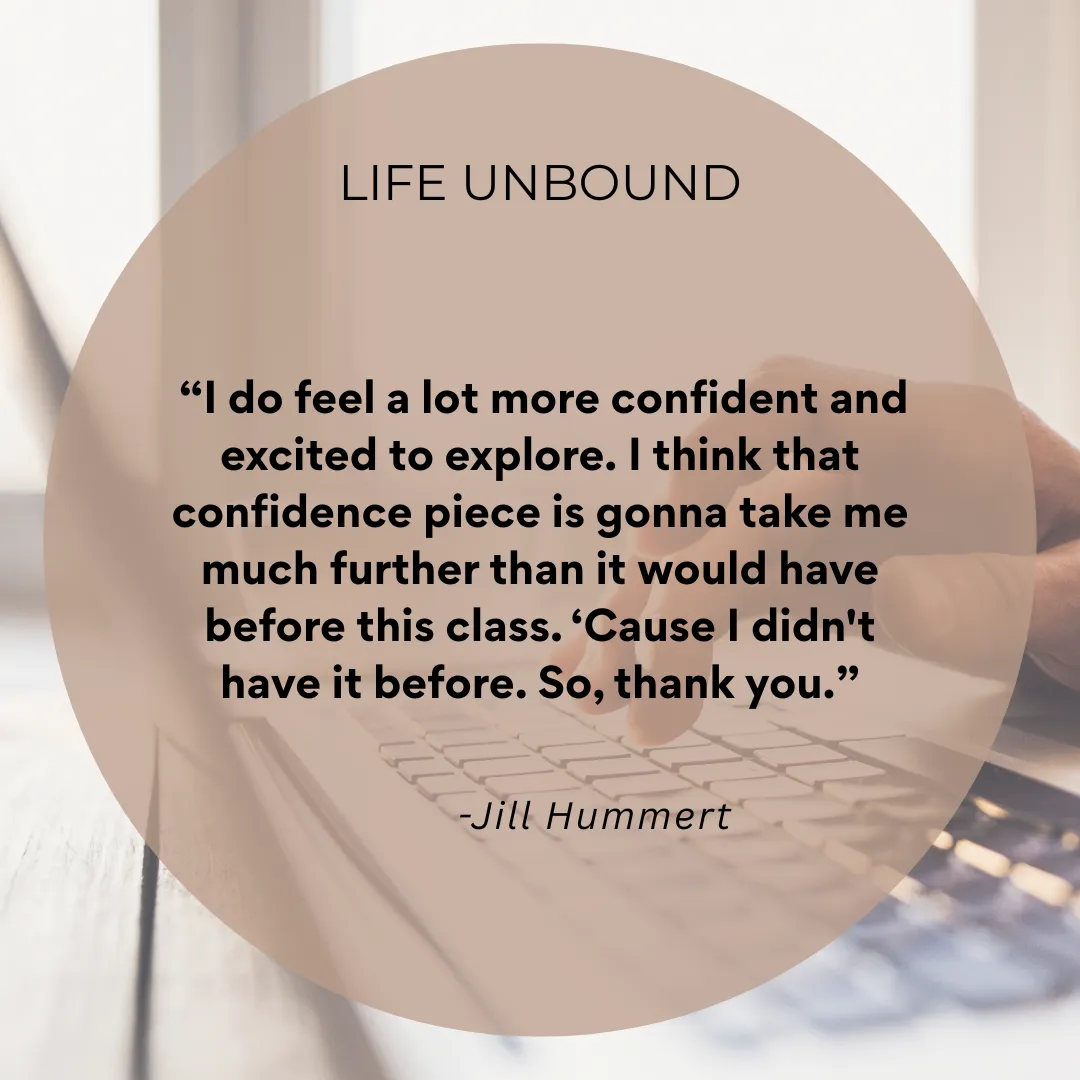
The AI Leverage Foundation
August 2025
Are you ready to unlock your AI skills?
Join a guided experience where you’ll learn to build your own AI toolkit, simplify your workflow, and make AI a supportive part of your life or business.
Just smart strategy, aligned tools, and personal guidance to help you feel capable—not behind.
Ebooks COMING SOON
2025!!
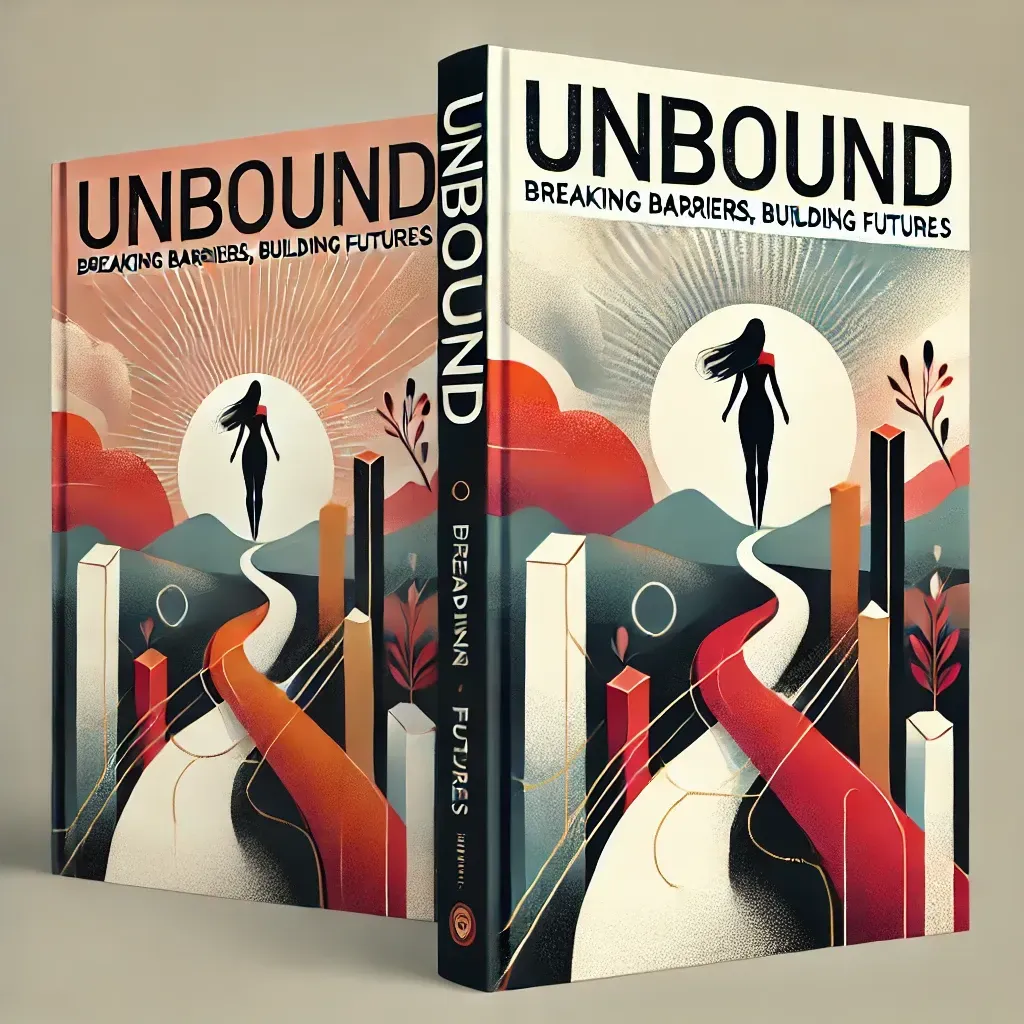
Find Your Authentic Path to Success
In a world where women continue to navigate unique challenges in the workplace, "Unbound" byy Amie Rafter, offers a transformative roadmap for professional advancement on your own terms
This isn't just another career guide—it's a comprehensive companion that blends cutting-edge research with practical wisdom to address the specific obstacles women face, from imposter syndrome to visibility gaps, negotiation challenges to work-life boundaries.
Whether you're launching your career, pushing through the middle management barrier, or aiming for the C-suite, this book provides the tools to transform challenges and live your purpose and potential,
MEET THE FOUNDER & CEO
Amie Rafter
Founder Amie Rafter is a seasoned professional with a diverse background in business, leadership and personal development. She holds an MBA and BS in International Business, spent 24 years in the tech and medical device corporate world and 5 years in non-profit, prior to starting her own business supporting entreprenuers with practical launch strategies. Her combined experience in strategic sales, leadership, along with being a life, career coach, yoga teacher and most importantly, mother, has given her a unique set of tools and capacity to offer holistic support to women.
Amie developed the Unbound model and platform after both experiencing and seeing the challenges women face every day both as entrepreneurs and leaders. She understands that the unique energy and intentions women bring are designed to support the world in the ways we need now and she wants to scale that energy, removing traditional obstacles for her clients and companies.

Blog

Why Am I a People Pleaser? 6 Root Causes You Might Not Realize
I am a recovering people-pleaser. I’ve known it for a while, but I didn’t know how deep it ran until recently.
And I know I’m not alone.
Studies show that 1 in 2 Americans identify themselves as people pleasers.
Even more telling - 9 out of 10 regularly engage in at least one people-pleasing behavior.
This got me thinking...
What causes us to become people pleasers in the first place?
Why do we value someone else’s opinion above our own?
Why do we conform ourselves into who others want us to be, just to feel better about ourselves?
Here are a few of the reasons we become people pleasers:
1. Childhood Conditioning
Many of us picked up people-pleasing behaviors in childhood—especially if we grew up in environments where love, attention, or safety felt conditional. Over time, we learned to earn approval by being likable, agreeable, helpful or “good.”
It wasn’t about being authentic—it was about being accepted.
2. Avoidance of Conflict
Some of us slip into people-pleasing because we can’t stand conflict. It feels uncomfortable, or even threatening.
So instead of speaking our truth, we simply nod and go along with the flow. But when we do that, we settle for artificial harmony. And in the process, we sacrifice true intimacy, because we’re not letting ourselves be seen or known.
3. Fear of Rejection and Abandonment
Another driving force behind people-pleasing is the fear of rejection or abandonment. For many of us, that fear isn’t imagined—it’s rooted in actual experiences.
Maybe there was a time when you were abandoned, rejected, or made to feel like you didn’t matter. Maybe there were many times like this.
So you learned to play it safe; to be what others wanted you to be, just to avoid feeling hurt again.
But when we live out of that fear, we end up projecting it onto others—assuming they’ll reject us too. Instead of relating to people as they are, we react to them out of the fear of our past wounds.
4. Low Self Esteem
When we wrestle with our sense of worth, we often feel like we have to earn love, connection, and security. So we over-give. We overdo. We force ourselves into the mold of what we think others want us to be—hoping it will make us feel accepted or loved.
People pleasing becomes our way of feeling lovable. Worthy. Enough.
But here’s the catch: it’s a short-term fix. It feels good at the moment, but it’s not a long-term solution. It soothes the symptom, not the wound.
5. Social or Religious Conditioning
Some societies, cultures, belief systems, and even religious teachings subtly reinforce people-pleasing behavior without realizing it.
Take the workplace, for example. Women are expected to be agreeable, not assertive and nurturing, not ambitious. But when a woman steps into her power or asserts herself, she’s often labeled as “difficult” or “demanding.” This is just one example.
These types of societal expectations reinforce people-pleasing behavior. And when taken to the extreme, they condition us to feel guilty for putting ourselves first.
We start believing that prioritizing our needs is selfish… even wrong.
But here’s the truth: loving others as yourself doesn’t mean completely losing yourself. It means showing up fully—without shrinking, shape-shifting, or ignoring who you are.
6. Past Trauma or Abuse
People pleasing can be a trauma response.
I know “trauma” is a buzzword lately—but this doesn’t make it any less real.
If you’ve experienced trauma—people pleasing may have begun as a survival strategy. You learned that keeping others happy led to you feeling safer. So you became agreeable. Helpful. Pleasant to be around. Not because you wanted to—but because it felt like the only way to respond.
But here’s the thing: what once protected you is now holding you back.
That old strategy isn’t helping you thrive—it’s keeping you stuck.
And maybe it’s time to let it go.
So...Now What?
If you saw yourself in any of these patterns, you’re not broken. You’re human.
People pleasing isn’t a character flaw—it’s a coping mechanism. It helped you survive in the past… but it’s not serving you anymore.
In fact, it’s probably making you miserable.
You don’t have to keep earning your worth. You don’t have to contort yourself into what others want just to feel better about yourself.
You’re allowed to take have wants and needs.
To say no.
To share your opinion.
To disappoint someone and still be a good person.
To choose yourself and still be kind.
Unlearning people-pleasing behaviors is a process—one that takes honesty, courage, and compassion.
But the freedom on the other side? It’s worth every step.
You don’t have to live your life trying to keep everyone else happy. You were created for more than that.
And maybe… this is the moment you start choosing you.
👉 Don’t miss the previous post on people-pleasing: “7 Signs You Might Be a People Pleaser."

Key Collaborators


Unbound is a sub brand of Hbird Consulting LLC
Looking to start a business or accelerate an existing one? Hbird Consulting offers Vision to Launch coaching and business development support. Check us out at hbirdco.com
Trusted By
Amie's support is personally and professionally empowering. Her services helped me overcome challenges and limiting blocks, moving forward with confidence and clarity in my work and life."

Samantha Berwick
Founder at Embodied Arts Healing
Business Consulting
The Unbound program gave me the frame work I needed to rapidly evolove and transform into the leader and change-maker I came here to be. The program helped me find a balance beteen structure and flow and allowed me the courage
to lean on my network more than ever.

Tracy Tarlow
Founder at Springboard Connectivity
Non-Profit